
When to See an Ophthalmologist vs. an Optometrist
Choosing the right eye-care professional is not always straightforward. An optometrist and an ophthalmologist can both assess your eyes and vision, but they have different roles and areas of expertise.
For routine vision care, an optometrist may be an appropriate first point of contact. If you have a diagnosed eye disease, need specialist treatment, may require surgery or have a complex eye problem, an ophthalmologist may be more appropriate.
So, when to see an ophthalmologist depends largely on what is happening with your eyes and the type of care you need.
Understanding the difference between an ophthalmologist and an optometrist can help you choose the right appointment and make sure you receive specialist care when it is needed.
What Is the Difference Between an Ophthalmologist and an Optometrist?
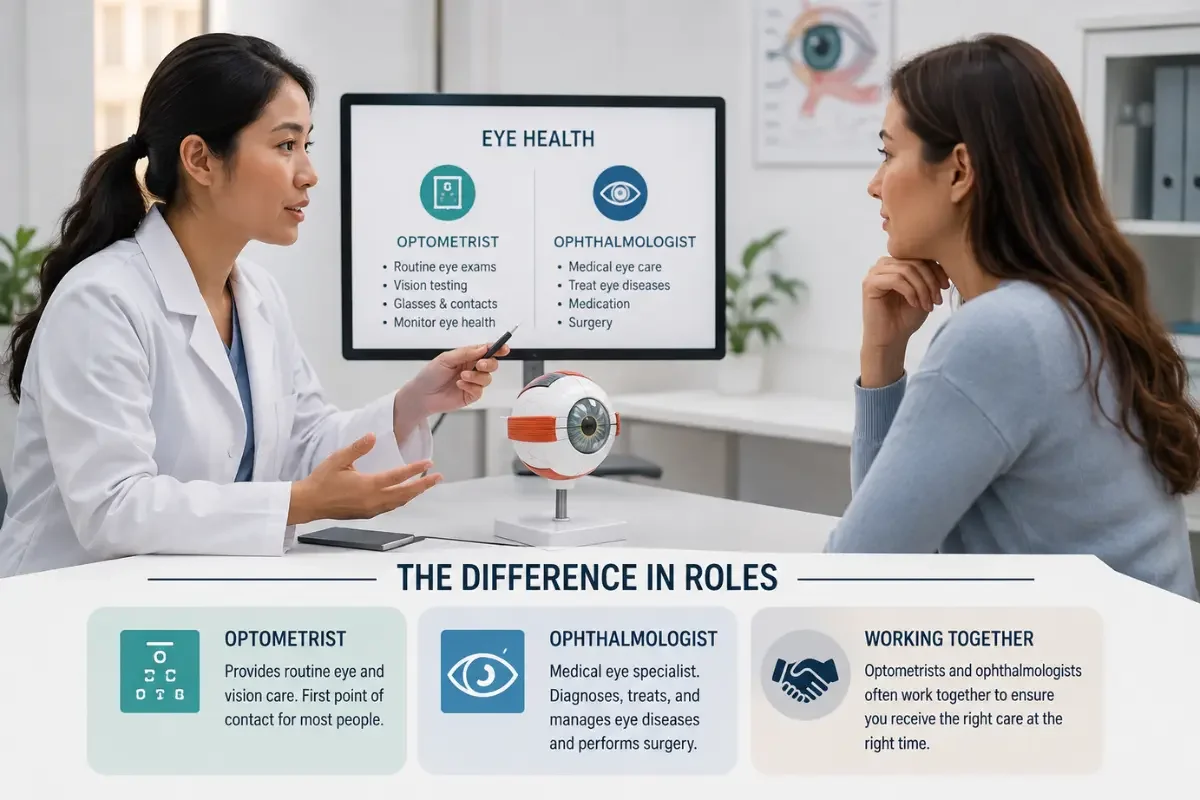
Optometrists and ophthalmologists both provide eye care, but they are not the same type of eye-care professional.
An optometrist generally provides primary eye and vision care. Depending on local regulations and scope of practice, an optometrist may:
Perform routine eye examinations
Assess vision
Prescribe glasses or contact lenses
Evaluate common eye and vision problems
Monitor certain eye conditions
Identify signs that may require further specialist assessment
Refer patients to an ophthalmologist when appropriate
An ophthalmologist is a medical doctor who specialises in eye health and disease. Ophthalmologists can diagnose and manage a wide range of eye conditions and may also perform eye surgery, depending on their area of specialisation.
They may treat conditions such as:
Cataracts
Glaucoma
Retinal disease
Macular conditions
Diabetic eye disease
Corneal conditions
Complex eye disorders
Eye conditions requiring surgery
The exact services provided by optometrists vary between countries and jurisdictions.
The simplest way to think about the difference is this:
Optometrist: often the starting point for routine eye and vision care.
Ophthalmologist: a medical eye specialist for eye disease, complex problems, specialist treatment and surgery.
In many cases, the two professionals work together rather than replacing one another.
When Should You See an Optometrist?
An optometrist can be a good starting point when your main concern involves routine vision or general eye care.
You may want to see an optometrist if you:
Need a routine eye examination
Want to check whether your vision has changed
Need a glasses prescription
Need contact lens care
Have gradual difficulty seeing clearly
Experience eye strain
Have difficulty seeing at certain distances
Want an initial assessment of a common eye concern
Need routine monitoring of your vision
An optometrist can assess your vision and eye health and determine whether you need further investigation.
If the examination identifies a condition that requires specialist medical or surgical care, you may be referred to an ophthalmologist.
This means you do not necessarily have to decide between an optometrist and an ophthalmologist on your own. An optometrist can sometimes help identify when specialist eye care is appropriate.
When To See an Ophthalmologist?
Knowing when to see an ophthalmologist becomes particularly important when your eye problem involves a known disease, significant vision changes, specialist treatment or possible surgery.
You may need to see an ophthalmologist if you:
Have a diagnosed eye condition
Need specialist assessment
Have unexplained or significant changes in vision
Have abnormal eye test results
Need a second opinion about an eye condition or treatment
Are considering eye surgery
Need treatment for an eye disease
Have a complex or long-standing eye problem
Have been referred by an optometrist or another doctor
The ophthalmologist can assess your condition and determine whether you need additional testing, monitoring, medication, treatment or surgery.
Here are some of the most common situations in which seeing an ophthalmologist may be appropriate.
1. When You Have a Known Eye Disease
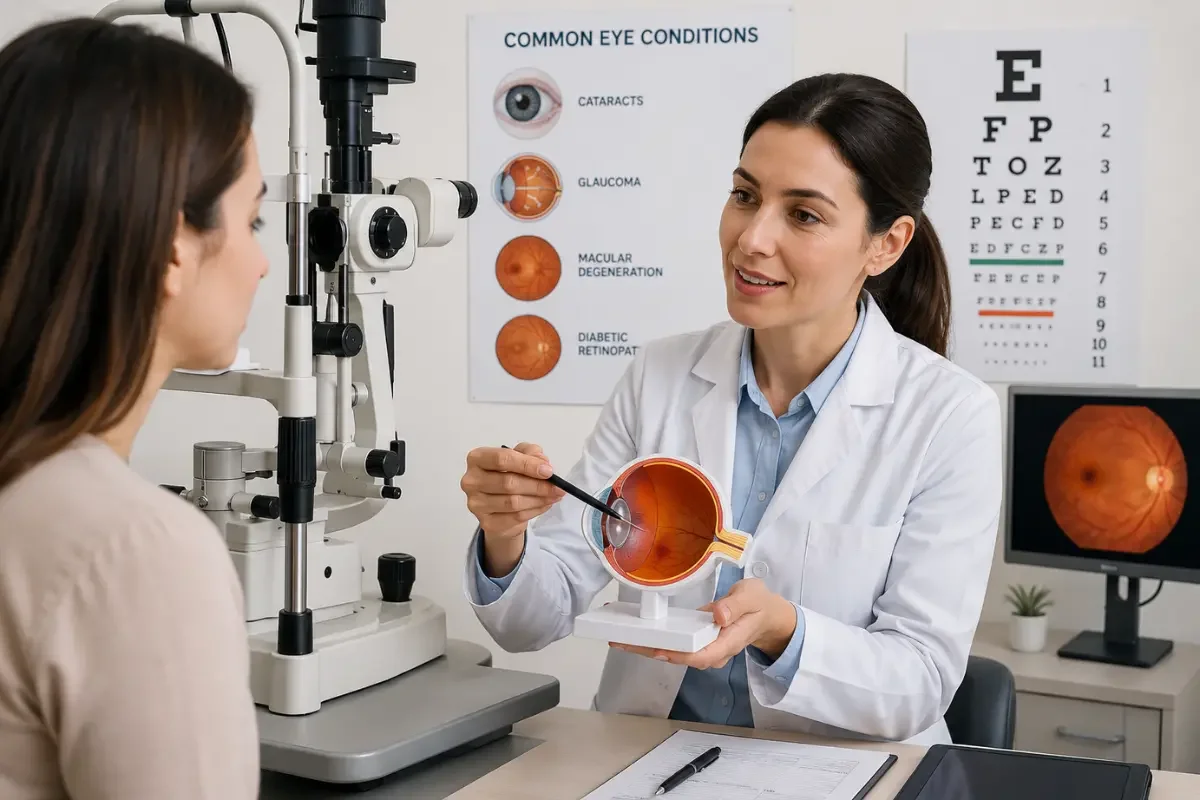
If you have already been diagnosed with an eye condition, you may need ongoing care from an ophthalmologist.
Examples include:
Glaucoma
Cataracts
Macular degeneration
Diabetic eye disease
Retinal disorders
Keratoconus
Previous retinal treatment
Other complex or long-term eye conditions
The type and frequency of follow-up depend on your condition.
For example, glaucoma and retinal disorders may require regular examinations and imaging to monitor changes over time.
An ophthalmologist can review your existing diagnosis and examination results and determine what monitoring or treatment is appropriate.
If you already have a treating ophthalmologist, an online consultation or second opinion may help answer questions between appointments, but it does not replace the examinations required for ongoing disease monitoring. Existing examination reports are particularly useful when discussing a known eye condition.
2. When Your Vision Has Changed Significantly
Not every change in vision requires an ophthalmologist.
Gradual changes in vision may often begin with a routine eye examination. However, significant, unexplained or rapidly developing changes may require specialist assessment.
You may want to seek further medical eye assessment if you experience:
A noticeable reduction in vision
A significant difference between your two eyes
Increasing difficulty seeing clearly
Distortion in your vision
A change in an existing eye condition
Vision changes accompanied by other eye symptoms
The urgency depends on how quickly the change developed and whether other symptoms are present.
An eye-care professional can help determine whether you need a routine examination, specialist assessment or more urgent care.
3. When You Have Abnormal Eye Test Results
Eye test reports can sometimes be difficult to understand.
You may have results from:
OCT scans
Retinal photographs
Visual field tests
Eye-pressure measurements
Other eye imaging or examinations
An ophthalmologist can help explain what these findings mean and whether they are relevant to an existing diagnosis or require further investigation.
During a specialist consultation, you may want to discuss:
What the test measures
Why the test was performed
What an abnormal result means
How the findings relate to your diagnosis
Whether additional testing is necessary
Whether treatment or monitoring is recommended
Whenever possible, have your previous reports and scans available.
The more complete the available information, the easier it is for the ophthalmologist to understand your previous assessment and advise you about the next step.
4. When You Are Considering Eye Surgery
If you have been advised to consider eye surgery, an ophthalmologist is the appropriate specialist to discuss the medical and surgical aspects of treatment.
You may be considering:
Cataract surgery
Lens replacement
Refractive surgery
Retinal treatment
Glaucoma treatment
Another specialist eye procedure
You may have questions about:
Why the procedure has been recommended
Whether alternatives are available
The expected benefits
Potential limitations and risks
Which treatment option may be appropriate
What examinations are required before treatment
For cataract or lens surgery, for example, you may want to discuss different intraocular lens options and understand why one option may be more suitable than another.
An online consultation can help you understand the proposed treatment and prepare questions, but it cannot replace the measurements and physical examination required before surgery. Final suitability must be established through the appropriate in-person assessment.
5. When You Want a Second Opinion
A second opinion is another common reason to see an ophthalmologist.
You may already have received a diagnosis or treatment recommendation but want another specialist's perspective before making a decision.
An ophthalmologist may review:
Your diagnosis
Eye examination reports
OCT scans
Retinal photographs
Visual field tests
Previous treatment
A proposed operation
Treatment alternatives
The potential benefits and limitations of different approaches
Seeking a second opinion does not necessarily mean that you disagree with your current doctor.
Sometimes you simply want confirmation that the recommended treatment is appropriate. You may also want a clearer explanation of your condition or the alternatives available to you.
An online specialist consultation can be particularly useful for obtaining a second opinion when your existing medical records and eye test results are available.
6. When You Have a Complex or Long-Term Eye Problem
Some people have ongoing eye problems that require specialist monitoring rather than a one-time vision check.
You may need ophthalmology care if you have questions about:
Glaucoma monitoring
Cataracts
Retinal disease
Diabetic eye disease
Macular degeneration
Keratoconus
Previous retinal treatment
Recovery following eye treatment
Another diagnosed eye condition
In these situations, the purpose of an appointment may be to understand your diagnosis, review previous results or determine what follow-up is needed.
Regular monitoring remains important for conditions that can change over time. An online consultation can help explain existing information, but it should not replace examinations and imaging recommended by your treating doctor.
7. When an Optometrist Refers You to an Ophthalmologist
Sometimes you may start with an optometrist and then be referred to an ophthalmologist.
This can happen when the examination suggests that you need:
Further investigation
Specialist diagnosis
Medical treatment
Advanced imaging
Monitoring of a significant eye condition
Surgical assessment
A referral does not necessarily mean that you have a serious eye disease.
It may simply mean that the optometrist has identified something that requires the equipment, medical expertise or treatment options available through ophthalmology.
The important point is that optometrists and ophthalmologists can work together as part of the same pathway of care.
Ophthalmologist vs. Optometrist: Which One Should You See?
A simple way to decide is to consider what you need from the appointment.
| Your concern | Where to start |
|---|---|
| Routine eye examination | Optometrist |
| Glasses prescription | Optometrist |
| Contact lens care | Optometrist |
| Gradual vision changes | Optometrist or ophthalmologist, depending on the circumstances |
| Eye strain | Optometrist |
| Initial assessment of a common eye concern | Optometrist |
| Known glaucoma | Ophthalmologist / specialist eye care |
| Cataract assessment or surgery | Ophthalmologist |
| Retinal disease | Ophthalmologist |
| Abnormal OCT or visual field results | Ophthalmologist or specialist referral |
| Possible eye surgery | Ophthalmologist |
| Second opinion about eye disease or treatment | Ophthalmologist |
| Complex or long-term eye condition | Ophthalmologist |
This is a general guide. The appropriate professional can vary depending on your symptoms, diagnosis, location and local scope of practice.
If you are unsure, an optometrist may be an appropriate starting point for a non-urgent concern and can refer you for specialist assessment when needed.
When Is an Eye Problem Urgent?
Some eye problems should not wait for a routine appointment.
If you develop a sudden or severe change in your vision, severe eye pain, significant eye trauma or another serious new symptom, seek urgent local medical or ophthalmic care.
For example, sudden vision loss, a curtain or shadow across your vision, or sudden flashes accompanied by many new floaters can require prompt assessment.
These symptoms are outside the scope of deciding simply between a routine optometrist and ophthalmologist appointment.
If you want to learn more about warning signs and when urgent assessment is needed, see our guide: “Eye Symptoms That Need Urgent Medical Attention.”
This distinction is important: the question “when to see an ophthalmologist” is generally about choosing the right level of specialist eye care, while sudden or severe symptoms may require immediate medical attention.
Can You See an Ophthalmologist Online?
An online ophthalmologist consultation may be useful when you need specialist advice about an existing eye condition, test results, treatment options or a second opinion.
It may help you:
Understand an existing diagnosis
Review available eye reports or scans
Discuss treatment options
Get a second opinion
Prepare for an in-person appointment
However, an online consultation cannot replace an in-person eye examination when physical examination, diagnostic testing or urgent treatment is required.
How to Prepare for an Ophthalmologist Appointment
Before seeing an ophthalmologist, prepare a few key details and documents that may help the consultation.
Consider bringing:
Recent eye examination reports
OCT scans or retinal photographs
Visual field test results
A list of current eye drops and medications
Details of previous eye surgery or treatment
Your glasses prescription, if relevant
A short timeline of your symptoms
It can also help to write down your main questions before the appointment so you can make the most of your consultation.
If you are preparing for an online specialist consultation, our guide explains what to expect from an online eye doctor consultation
Should You See an Ophthalmologist or an Optometrist?
The right eye-care professional depends on what you need from the appointment.
An optometrist may be the right starting point for routine eye examinations, vision checks, glasses or contact lens care and many non-urgent vision concerns.
An ophthalmologist may be more appropriate when you have a diagnosed eye disease, significant or unexplained vision changes, abnormal test results, a complex eye problem, a possible need for surgery or a need for specialist treatment or a second opinion.
In many cases, the two professionals work together. You may start with an optometrist and be referred to an ophthalmologist when specialist care is needed.
Knowing when to see an ophthalmologist can help you access the right level of care without unnecessary delays.
If you are unsure which type of eye-care professional you need, an eye consultation can help clarify the next step.
Need specialist advice about an eye problem, diagnosis, test result or proposed treatment? Book an online eye consultation with Eye Consult Online to discuss your situation with an ophthalmologist and understand your next steps.
