
The right time depends on how your vision affects daily life, whether glasses or contact lenses still meet your needs, and what a detailed eye examination shows. Age alone does not determine whether surgery is appropriate.
The Short Answer
Lens replacement surgery may be worth considering when your vision is affected by presbyopia, early cataract changes, or a high glasses prescription and a comprehensive assessment shows that the likely benefits outweigh the risks. The decision should be based on your eye health, visual priorities, available alternatives, and tolerance for optical effects such as halos or reduced contrast.
For some people, continuing with glasses or contact lenses is the better choice. For others, the difficulty of switching between distances becomes a daily limitation. A specialist assessment should establish which situation applies to you.
What Lens Replacement Surgery Means
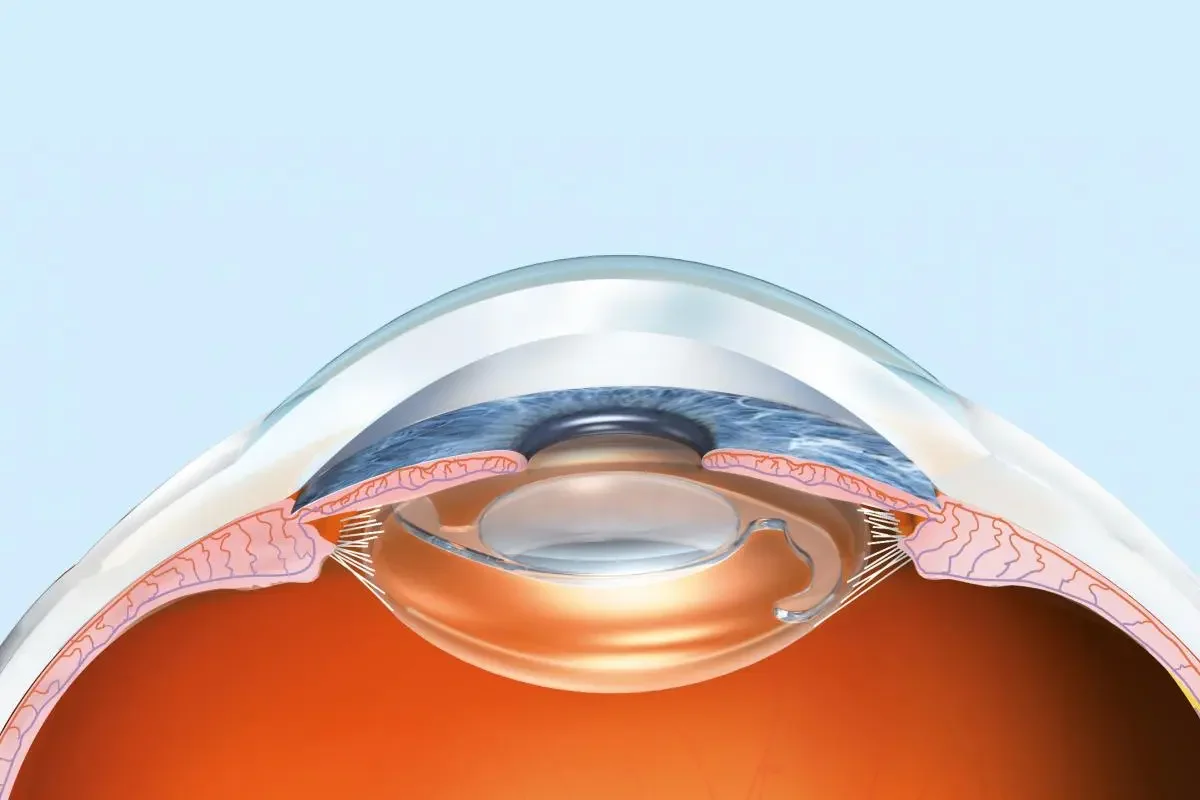
Lens replacement surgery is also called refractive lens exchange or presbyopic lens exchange. You may also see the abbreviation RLE or PRELEX. The surgeon removes the natural lens inside the eye and replaces it with an artificial intraocular lens, known as an IOL.
The procedure uses the same basic surgical approach as cataract surgery. The difference is the reason for treatment. Cataract surgery removes a cloudy lens that is affecting vision. Refractive lens exchange may be considered before a cataract is visually significant, with the aim of correcting focus and reducing dependence on glasses. Removing the natural lens is permanent, so the decision deserves careful evaluation and informed consent.
Signs It May Be Worth Considering
A discussion about lens replacement may be reasonable when several of the following apply
Reading and intermediate tasks are difficult even though distance vision remains relatively good
You regularly switch between distance, computer, and reading glasses
Screens, dashboards, menus, or labels interrupt work and daily routines
Glasses or contact lenses are impractical for the sports or activities you value
Your prescription or early lens changes make other refractive options less suitable
You understand that surgery may reduce dependence on glasses but cannot guarantee complete freedom from them
The limitation may become clearest outside the clinic. You might see the road well but struggle to read the navigation screen, follow a tennis ball and then check a watch, or find a departure gate while searching for reading glasses. These examples do not prove that surgery is necessary. They help you explain which viewing distances matter in your life.

When Waiting May Be Better
Monitoring or continuing with glasses can sometimes be more appropriate when
Your current correction provides comfortable vision for the activities you need
Symptoms are mild and do not interfere with daily life
Night driving contrast is a high priority and you are not comfortable with possible halos or glare (although newer generation of lenses have much less halos or glare)
Another option can meet your needs and you’re not comfortable with any intervention
An eye condition increases surgical risk or limits the likely benefit
Elective refractive lens exchange is never an emergency procedure, so there is time to consider the decision carefully. For many people, the choice is driven by moments when glasses or contact lenses become inconvenient. Examples include reading a navigation screen while driving, changing focus between a computer and documents, playing sports, or travelling. The choice may also arise when dependence on glasses or contact lenses no longer fits the person’s lifestyle. An ophthalmologist should still examine the eyes, confirm suitability, compare the alternatives, and explain the likely benefits and trade-offs before surgery.
Choosing an Intraocular Lens
The word premium describes a category of lens technology, not a lens that is best for every eye. The appropriate IOL depends on the health and measurements of the eye, astigmatism, the distances you use most, your lifestyle and your willingness to accept optical tradeoffs.
| Lens type | Typical aim and considerations |
|---|---|
| Monofocal | Clear focus at one main distance, with glasses commonly used for other distances. It usually provides the strongest contrast profile. |
| Toric | Correction of corneal astigmatism. Toric technology can be combined with several optical designs. |
| Extended depth of focus | A broader range from distance through intermediate vision, with reading glasses still possible for fine near work. |
| Multifocal or trifocal | Multiple focal points for distance, intermediate, and near vision, with greater spectacle independence and a higher likelihood of some halos, glare, or reduced contrast than with a monofocal lens. |
Benefits and Tradeoffs of Multifocal Lenses
Multifocal and trifocal IOLs can improve unaided vision across more than one distance and reduce or eliminate the need for glasses. They divide incoming light between focal points, which can also reduce contrast and create halos, glare, starbursts, or ghost images. These effects are often most noticeable in dim light or when driving at night. Adaptation varies, and some people continue to need glasses for selected tasks. Newer IOL’s have much less of these side effects.
Lens replacement is intraocular surgery. Possible complications, although seldom, include infection, inflammation, a residual prescription, movement of the IOL, retinal complications, and posterior capsule opacification. Additional treatment or surgery is sometimes needed, and serious loss of vision is rare but possible. Your surgeon should explain how these risks apply to your eyes before you decide.
Who Needs Extra Caution
Multifocal lenses are not suitable for every eye. High myopia, retinal or macular disease, glaucoma, corneal irregularity, significant dry eye, amblyopia, or other ocular conditions may reduce visual quality or increase risk. A healthy eye surface is also important because dry eye can affect both measurements and the quality of vision after surgery.
A careful retinal and macular assessment is especially important when refractive lens exchange is being considered in a highly myopic eye. The final recommendation may be a different lens design, treatment of another condition first, or no surgery.
Previous LASIK, PRK, or another corneal laser procedure does not automatically rule out lens replacement, but it changes the shape and focusing power of the cornea. This makes IOL power calculations less predictable than in an eye that has not had laser vision correction. Tell the surgeon about all previous laser treatment and bring pre-LASIK prescriptions or treatment records if they are available. Additional corneal measurements and specialized calculation methods may be needed, and there may be a greater chance of needing glasses or a later enhancement to fine-tune the result.
What a Lens Assessment Should Cover
A suitability assessment begins with your prescription, symptoms, medical and eye history, work, hobbies, and night driving needs. Depending on the eye, testing may include a slit lamp examination, dilated retinal examination, eye pressure measurement, optical biometry, corneal topography, ocular surface assessment, and macular OCT.
Measurements alone do not select the lens. The consultation should connect the findings to your lifestyle and hobbies, explain realistic outcomes, and compare surgery with the option of waiting.
Questions to Ask Before Surgery
What is causing my current visual difficulty?
Would glasses or contact lenses still meet my needs?
Why is this lens design being recommended for my eyes?
How might halos, glare, or reduced contrast affect my night driving?
What is my individual retinal and surgical risk?
How likely am I to need glasses or further treatment afterward?
What follow-up will I need and how should I plan travel?
Frequently Asked Questions
Is there a best age for lens replacement surgery?
No single age is correct for everyone. Suitability depends on presbyopia, prescription, eye health, lifestyle, and alternatives. Usually lens exchange is not suitable for people younger than 45, but exceptions occur.
Do I need to have a cataract?
No. Refractive lens exchange can be considered before a visually significant cataract develops. Because it removes a natural lens that may still be clear, the reasons, alternatives, and risks need particularly careful discussion.
Will a multifocal lens mean I never need glasses?
It generally reduces dependence on glasses, but it cannot guarantee that you will never need them. Very fine print, low light, a residual prescription, or future eye conditions may still make glasses useful.
Is the result permanent?
The IOL is intended to remain in the eye permanently, and removing the natural lens is irreversible. The focusing result can be affected by healing, posterior capsule opacification, ocular surface problems, or eye disease that develops later.
Planning an Online Eye Consultation
Eye Consult Online provides remote ophthalmology consultations for people seeking expert guidance about lens replacement, cataract surgery, and intraocular lens options. An online consultation can help clarify whether lens exchange may be worth exploring, which records or scans are useful, and what questions to take to an in-person surgical assessment.
An online consultation cannot confirm surgical suitability or replace the measurements and dilated eye examination required before lens surgery. It can help review previous reports, discuss lifestyle priorities and lens options, and identify the next appropriate step. If surgery is being considered, the operating surgeon must complete the in-person examination and measurements.
Considering lens replacement? Book an Online Eye Consultation
This article provides general information. An online consultation can help clarify options and next steps, but it does not replace the in-person eye examination, measurements, diagnosis, or informed consent discussion required before lens surgery.
